Ackuritlabs And Aqua Systems

Residential Water Softener Installation

Great-tasting, healthy water starts long before it reaches your kitchen tap, and for most homes across the Big Bend region it starts with a properly sized, properly installed water softener. Between mineral-heavy municipal supply in the capital city and the private wells common throughout Wakulla County, Gadsden County, and the surrounding rural communities, hard water is less an occasional annoyance and more a daily reality. We at Ackuritlabs and Aqua Systems design and install residential water softeners built around the specific water conditions found in your home, not a one-size-fits-all box pulled off a shelf.

Why does residential water softening matter in our service area?

Hard water is a persistent issue across Tallahassee, Madison, Wakulla County, and the smaller communities in between. Calcium and magnesium levels vary from neighborhood to neighborhood, from the municipal lines feeding subdivisions near Lake Ella and Midtown to the private wells common out past Fort Braden and Woodville, but the effects tend to look the same everywhere: chalky buildup on faucets, dingy laundry, and water heaters working harder than they should. Left untreated, scale accumulates inside pipes and appliances, shortening their lifespan and quietly driving up energy bills.

A softener installed correctly addresses the mineral content at the source, rather than papering over the symptoms with filters that don't touch hardness. That distinction matters. Families who invest in proper softening typically notice a difference within days, not months.

Our water softener installation process

Every installation begins with understanding what's actually in your water, not guessing at it. Our approach follows a consistent sequence designed to eliminate surprises:

  1. Comprehensive water assessment to measure hardness, iron content, and other factors specific to your supply, whether it comes from the Tallahassee municipal system or a private well.
  2. System sizing based on household size, daily water usage, and peak flow rate, so the unit is neither undersized nor unnecessarily large.
  3. Professional unit placement in a location that supports easy maintenance and efficient plumbing runs, accounting for Florida's humidity and the crawlspace or garage setups common in homes throughout this area.
  4. Connection to plumbing and, where needed, electrical service, completed to Leon County or applicable local plumbing code and tested for leaks before anything is buttoned up.
  5. Full system testing and homeowner walkthrough, so you understand settings, salt levels, and regeneration cycles before we leave.

This process looks the same whether we're installing in a Tallahassee subdivision or a well-fed home out toward Crawfordville or Fort Braden; what changes is how the system is calibrated to match the water it's treating.

Water softening materials and technology

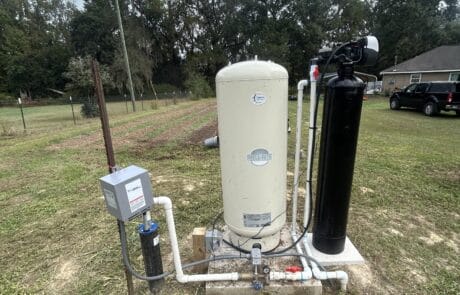
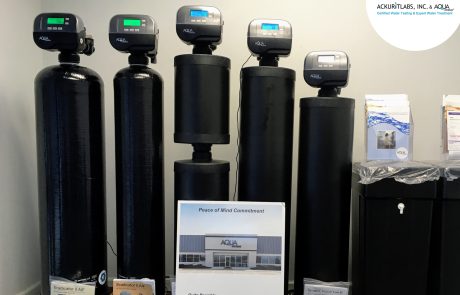
We install Aqua Systems equipment built around ion-exchange resin, paired with a brine tank and a control valve that manages regeneration automatically. This is proven technology, not experimental hardware, and it's rated to handle the flow demands of a full household without a drop in pressure during peak use, like morning showers running alongside a washing machine.

Decades of regional service experience inform how we size and calibrate these systems. Water in Perry does not behave exactly like water in Monticello or Quincy, and equipment set up without accounting for those differences tends to underperform or wear out prematurely.

Local water conditions we treat

Homeowners throughout our service area deal with a range of water quality issues, and softening is often just one piece of a broader solution. Conditions we regularly encounter and treat include:

  • Municipal chlorine or chloramine that affects taste and odor, common in the treated water supply serving Tallahassee neighborhoods
  • Calcium and magnesium hardness that causes scale on fixtures and appliances
  • Iron staining common in private well water around Wakulla County and Gadsden County communities
  • Sediment that clouds water and clogs aerators
  • Sulfur odor from wells, often described by homeowners as a rotten-egg smell
  • Tannins that discolor water drawn from certain groundwater sources near the Apalachicola River basin communities like Chattahoochee and Blountstown

Municipal customers in Tallahassee often deal primarily with hardness and chlorine taste, while well owners in areas like Greensboro, Havana, or Lamont are more likely to face iron, sulfur, or sediment alongside hardness. A proper water assessment sorts out which of these apply to your home before any equipment gets installed.

What are the common signs your home needs water softening?

Some signs are obvious, others build up slowly enough that homeowners stop noticing them. Watch for:

  • White, chalky residue around faucets, showerheads, and drains
  • Soap and shampoo that won't lather well or rinse clean
  • Skin that feels dry or tight after bathing, even with moisturizing soap
  • Spots and film on dishes and glassware straight out of the dishwasher
  • Laundry that feels stiff or looks dull despite regular washing
  • A water heater that seems to be losing efficiency faster than expected

If two or three of these sound familiar, it's worth scheduling a water assessment rather than waiting for the problem to worsen.

Installation and ongoing support

Our technicians install and service softeners throughout Tallahassee, Quincy, Chattahoochee, Gretna, Midway, Monticello, Greenville, Madison, Perry, Blountstown, Saint Marks, Woodville, and the rest of Wakulla County. Installation isn't the finish line for us; it's the starting point of an ongoing relationship. Every installation includes system startup verification, a water quality check to confirm the softener is performing as designed, and guidance on setting up a maintenance schedule, including salt refills and periodic resin checks.

We also make sure homeowners understand their own system. A softener that's misunderstood tends to get neglected, and neglect is what shortens equipment life. Our team walks through settings, regeneration timing, and basic troubleshooting so you're not left guessing months down the road.

How does soft water extend appliance life and save money?

Scale buildup is one of the most preventable causes of premature appliance failure. Water heaters, dishwashers, washing machines, and even coffee makers all suffer when mineral deposits accumulate on heating elements and internal components. Soft water reduces that buildup significantly, which translates into:

  • Lower energy bills, since heating elements free of scale work more efficiently
  • Fewer repair calls for appliances strained by mineral deposits
  • Longer effective lifespan for water heaters and major appliances
  • Less detergent and soap needed for the same cleaning results

Over several years, these savings often offset a meaningful portion of what a household spends on softening equipment and its upkeep.

Why professional installation protects your investment

It's tempting to treat a water softener as a straightforward DIY project, but the risks tend to outweigh the savings. Improper sizing leads to a unit that either regenerates too often, wasting salt and water, or too rarely, letting hard water slip through. Incorrect plumbing connections can cause leaks that go unnoticed until they've caused real damage, a real concern in Florida's humid climate where undetected moisture behind walls invites mold quickly. Many manufacturers also require professional installation to keep warranties valid, meaning a mistake made during a weekend project could leave you without coverage exactly when you need it.

Our certified installation approach ensures the system is connected to code, sized correctly for your household's actual usage, and tested thoroughly before we consider the job finished. That attention to detail is what separates a softener that performs well for fifteen years from one that needs early replacement.

Ready for better water?

Hard water, chlorine odor, iron staining, and scale buildup are common throughout Tallahassee and the surrounding Big Bend communities, but none of them are permanent conditions your home has to live with. A professionally sized and installed water softener, backed by an honest water assessment, resolves these issues at the source and protects your plumbing, appliances, and daily comfort for years to come, whether your home draws from a municipal line near downtown Tallahassee or a private well out toward Monticello or Perry. The longer hard water sits untreated, the more it costs in worn-out appliances, higher energy bills, and plumbing repairs that a simple assessment could have prevented. Reach out to Ackuritlabs and Aqua Systems to schedule a free water assessment, and let our team design a solution built around what's actually in your water rather than a generic guess. Acting now, before the next hot summer stretches your water heater and appliances to their limit, means fewer repairs, lower utility costs, and noticeably better water for everything from morning coffee to evening showers.